
What to Eat in Agra: Petha, Bedai-Jalebi, Chaat and Mughlai Food
By IWIS Global · Published 15 October 2026
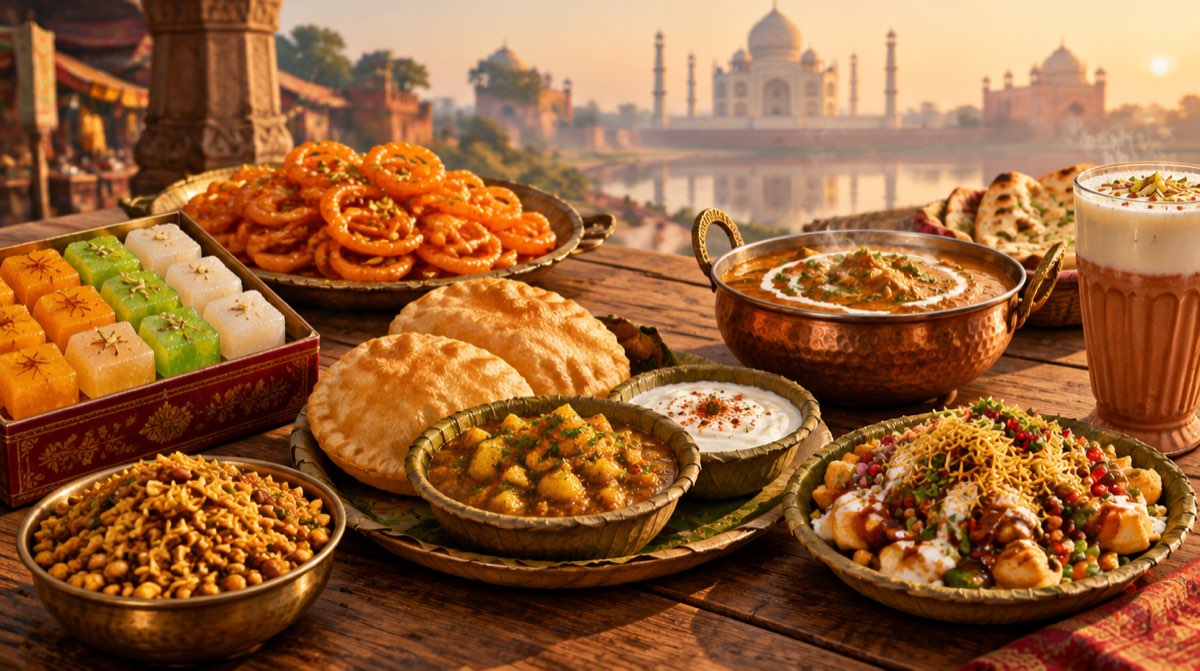
What to eat in Agra comes down to four things: petha, bedai with jalebi for breakfast, chaat, and Mughlai food for dinner. Petha is the translucent sweet Agra is known for, bedai-jalebi is the city's real local breakfast, chaat is the snack you graze on between monuments, and Mughlai cooking is the rich legacy of the Mughal court that once ruled from here. This guide explains what each dish is, when to eat it, how to order, and how to eat well without upsetting your stomach, so your day in Agra is about more than the Taj Mahal.
What to eat in Agra at a glance
| Dish | What it is | Best time | Vegetarian? |
|---|---|---|---|
| Petha | Translucent candy made from ash gourd, soaked in sugar syrup | Any time; buy after visiting the Taj Mahal | Yes |
| Bedai and jalebi | Puffed fried bread stuffed with spiced urad dal, with potato sabzi and curd, then hot jalebi | Morning, ideally before 9 AM | Yes |
| Chaat | Savoury street snacks: bhalla (aloo tikki), kachori, samosas, dahi bhalla | Afternoon and evening | Yes |
| Dalmoth | Crisp, spicy fried lentil and nut snack mix | Any time; buy a box to take home | Yes |
| Mughlai food | Creamy curries, kebabs, biryani and naan from the Mughal tradition | Lunch or dinner | Mostly meat, with vegetarian options |
Petha: Agra's signature sweet
Petha is a soft, translucent candy made from ash gourd, also called white pumpkin. Cooks slice the gourd into bite-sized pieces, soak them for a few hours in a lime solution (calcium hydroxide, known locally as choona) to keep them firm, boil them until soft, then soak them in sugar syrup. The result has a slightly crisp, sugary outside and a moist, sticky inside.
Flavours to try:
- Dry petha: the classic, firm and sugar-coated.
- Angoori petha: small, soft, syrup-soaked pieces named after grapes (angoor).
- Kesar petha: flavoured with saffron.
- Others: paan, gulab (rose), chocolate, coconut and nut varieties, and sometimes kewda essence.
Is the Taj Mahal petha legend true? A popular story says petha was invented in Shah Jahan's kitchens to feed the workers who built the Taj Mahal. Food historians consider that highly unlikely: petha does not appear in Shah Jahan-era cookbooks, similar ash-gourd sweets existed in the subcontinent before the Mughals arrived, and petha is nothing like the rich, milk-and-khoya sweets the Mughal court preferred. It is a good story, but treat it as a story. For the real history of the monument and the couple behind it, read Shah Jahan and Mumtaz Mahal: the real story behind the Taj Mahal.
How to buy petha:
- Taste first. Good shops let you try a piece before you buy a box.
- Check the name carefully. Panchhi Petha is one of the best-known names, and several shops use similar spellings. Pracheen Petha is another name locals trust. Look for the exact name and a branch with plenty of customers.
- Buy after the Taj Mahal, not before. The Taj Mahal bans food, even small sweets, so you cannot carry a petha box inside. Our guide to what not to bring to the Taj Mahal has the full list.
Bedai and jalebi: the Agra breakfast
Bedai (also spelled bedmi or berahi) is a puffed, deep-fried bread stuffed with spiced, ground urad dal. In Agra it comes with a spicy potato sabzi, often with pumpkin, and a spoonful of curd. It is followed by jalebi: coils of fermented batter fried crisp and soaked in warm sugar syrup. Together they are the city's classic breakfast, sweet and savoury in one sitting, and the whole meal is vegetarian and eggless.
When and where. Most halwais (sweet-makers) open early, and the freshest bedai and jalebi are often gone by late morning, so go before about 9 AM and carry small cash. The best-known hunting ground is the old city, around Rawatpara, Kinari Bazaar and Seth Gali, where sweet shops, chaat stalls and the Rawatpara spice market sit close together. Two names that travellers and local guides often mention are Deviram Sweets at the Pratap Pura crossing and Munna Lal Halwai near Namak ki Mandi. Shops change, so ask your hotel or guide to confirm which counters are best on the day.
How to do it: graze across three or four stops, bedai at one, jalebi at another, and a petha to finish. Portions are small and inexpensive, and you will need a place to wash your hands afterwards, because both foods are messy. A relaxed bedai-jalebi walk takes about two to three hours.
Chaat: the snack you eat between monuments
Like Delhi, Agra loves chaat, the family of savoury street snacks. The ones to look for:
- Bhalla (called aloo tikki elsewhere in India): a fried potato and chickpea patty, smashed open and topped with a spicy-sweet sauce and grated ginger. It is one of Agra's favourites.
- Kachori: crisp fried pastries, with fillings such as dal or onion.
- Samosas and dahi bhalla: the familiar potato samosa, and soft lentil dumplings in curd.
- Gol gappa (pani puri): crisp shells filled with spiced water.
Be careful with gol gappa and anything made with raw vegetables or tap water, because the water may not be filtered. If you want to try them, choose a busy, clean stall and ask where the water comes from. Freshly fried items, such as bhalla and kachori, are the safest and often the best.
Dalmoth: the snack you take home
Dalmoth is a traditional Agra namkeen, a savoury dry snack of fried lentils, nuts, spices and oil. It is crisp, spicy and addictive, and it is usually sold in boxes and bags in sweet shops, often alongside petha. It travels well, so it makes an easy gift. As with petha, it is best bought after your monument visits.
Mughlai food: the taste of the Mughal court
The Mughals made Agra their capital in the 16th century, and their cooking left a lasting mark on the city, as it did on Delhi and the rest of North India. Mughlai cuisine grew out of the Indo-Persian courts of the empire. Its trademarks are creamy, richly spiced gravies, whole and ground spices, nuts and dried fruit, and roasted meats.
What to order:
- Kebabs: seekh, shami and tikka, grilled or pan-cooked.
- Biryani: fragrant layered rice with meat and spices.
- Korma: meat slow-cooked in a creamy, nut-rich gravy. Mutton korma is a classic.
- Butter chicken and naan: strictly a Mughlai-influenced Punjabi dish, but on almost every Agra menu, best with butter naan.
- Vegetarian Mughlai: malai kofta, kadhai paneer and baingan bharta (smoked aubergine) are common choices.
- Lassi: a cool, thick yoghurt drink that balances the richness. Choose one without ice.
Where to eat it. Mughlai restaurants cluster around Sadar Bazaar, the Taj Ganj area and Fatehabad Road, from simple local places to hotel restaurants with a view. For a day trip, a family-run restaurant near your next sight is usually more relaxed than one by the Taj Mahal gate. Check recent reviews for hygiene and prices, and ask your guide for a recommendation.
Eating well in Agra: practical tips
- Choose busy stalls. Crowds usually mean fresh food and fast turnover.
- Eat food that is fried or boiled fresh. Bedai, kachori and jalebi are safe bets. Be careful with raw salads, cut fruit and ice.
- Drink sealed or filtered water. Check the bottle seal.
- Start mild. If you have a sensitive stomach, ask for less spice, and add richer dishes slowly.
- Carry small cash, hand sanitiser and tissues. Many counters do not take cards, and some foods are messy.
- Do not bring food into the Taj Mahal. Eat before or after.
- Dietary needs: the bedai-jalebi trail is entirely vegetarian and eggless. Mughlai menus are meat-heavy, but they always include vegetarian dishes. Tell the staff clearly if you avoid specific ingredients.
A day of eating in Agra, planned around the monuments
This is one way to fit the food around the sights:
- Early morning: bedai and jalebi in the old city, or after a sunrise visit to the Taj Mahal.
- Morning: the Taj Mahal and Agra Fort. Remember the Taj Mahal is closed on Fridays, while Agra Fort is open every day.
- Lunch: a plate of chaat, or a Mughlai thali or kebab lunch near your next stop.
- Afternoon: the best places to visit in Agra, then a petha and dalmoth stop on your way out.
- Evening: a Mughlai dinner with kebabs, korma, naan and lassi.
On a same-day trip from Delhi? Time is tight, but a food stop is easy to fit. Tell your guide at the start of the day that you want a petha shop or a chaat snack, so they can suggest a stop that fits your schedule. See the same-day Agra tour from Delhi, the Agra private sightseeing tour, or all our tours. If you are unsure how much time you need, read our guide on whether one day is enough and the best time to visit the Taj Mahal.
FAQs about food in Agra
What is Agra famous for food-wise? Petha, the translucent ash-gourd sweet, is Agra's best-known food. Bedai with jalebi, chaat, dalmoth and Mughlai dishes are the other highlights.
What is petha made of? Ash gourd (white pumpkin) and sugar. The gourd is soaked in lime water, boiled and then soaked in sugar syrup.
What is bedai? A puffed, deep-fried bread filled with spiced urad dal, served in Agra with potato sabzi and curd. It is eaten with jalebi for breakfast.
What time should I eat bedai-jalebi? In the morning, ideally before 9 AM. The freshest bedai and jalebi are often gone by late morning.
Is Agra street food safe? Freshly fried food from a busy stall is generally the safest choice. Be careful with raw vegetables, ice, gol gappa and tap water, and drink sealed or filtered water.
Is there vegetarian food in Agra? Yes. Petha, bedai-jalebi, chaat, dalmoth and many Mughlai dishes, such as malai kofta and kadhai paneer, are vegetarian.
What is Mughlai food? A rich cuisine from the Mughal Empire's courts: creamy curries, kebabs, biryani, nuts and dried fruit, and roasted meats.
Where can I buy petha? In sweet shops across Agra, including the well-known Panchhi Petha and Pracheen Petha. Check the exact shop name, taste before you buy, and buy after visiting the Taj Mahal.
Can I take food into the Taj Mahal? No. Food, even small sweets, is not allowed inside the complex. Eat before or after your visit.
Can I fit a food stop into a one-day Agra tour from Delhi? Yes. Mention it to your guide at the start, and they can suggest a stop that fits your schedule.
Sources
Petha preparation and history are taken from Wikipedia's article on petha. The Agra breakfast trail, chaat and dalmoth draw on TasteYatra and Eat Your World, and the background on Mughlai cuisine comes from Wikipedia. The Taj Mahal's food rule is on ASI's Dos and Don'ts page. Shops and prices change, so we name areas rather than quote prices, and we recommend checking recent reviews.
More from the blog
- Did Shah Jahan Build the Taj Mahal After Mumtaz's Death? Yes: Mumtaz Mahal died in 1631 and the Taj Mahal was begun in 1632. The full timeline, from her first grave in Burhanpur to the finished tomb in 1653.
- What Is the Real Story Behind the Taj Mahal? 10 Myths vs Facts The real story behind the Taj Mahal, myth by myth: the temple claim, the 22 locked rooms, the Black Taj, the craftsmen's hands and more, checked against the records.
- Agra Travel Glossary: 40 Terms to Know Before You Go A plain-English Agra travel glossary: 40 terms, places and rules, from Taj Mahal tickets and Friday closures to UNESCO sites, trains and food.
Keep reading
- Taj Mahal Ticket Price 2026: The Full Cost Taj Mahal tickets: foreign entry is ₹1,100, but most guides leave out the ₹200 mausoleum ticket. The full cost stack, sourced from ASI's own ticketing page.
- How to Avoid Taj Mahal Scams (2026) The scams that catch visitors between Delhi and the Taj Mahal, from fake ticket sites to 'skip the line' guides, and how to check any operator.
- Taj Mahal Opening Hours and Friday Closure The Taj Mahal opens 30 minutes before sunrise and is closed every Friday. Opening times by month, ticket counters and gates, from ASI's own page.