
Taj Mahal: Why October–February Is the Best Time to Visit
By IWIS Global · Published 29 September 2026 · Updated 30 September 2026
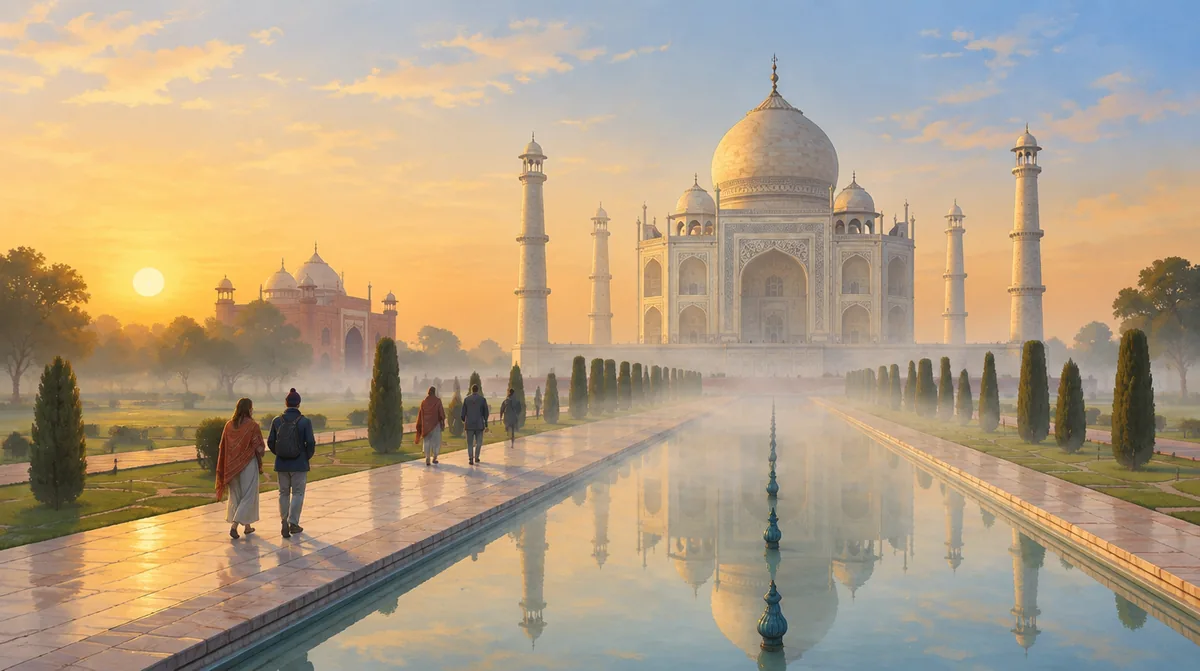
Agra's high season doesn't officially start until November, but the shift begins now, in the last days of September — daytime temperatures drop out of the monsoon-humid 30s°C and the haze over the Yamuna clears. If you're planning a Taj Mahal trip for the next few months, October through February is the window nearly every seasoned guide points to, and it's worth knowing exactly why — and what's changed since you last read a "best time to visit" list.
Why October–February
Daytime temperatures across this stretch run comfortably in the 20s–low 30s°C, a sharp contrast to Agra's summer, when they regularly cross 40°C. November through February also brings morning fog and haze, which is worth building into your schedule: a sunrise visit timed for "30 minutes before sunrise" (the Taj's official opening rule) can mean a soft, hazy monument rather than a crisp one on the foggiest January mornings. If a clear photograph matters more to you than solitude, October and early November — after the haze clears but before peak fog season — are the sharper bet. For the month-by-month detail — temperatures, pollution and sunrise times — see our guide to the best month to visit the Taj Mahal.
The trade-off is crowding: this is also when tour buses and peak foreign arrivals concentrate, so "shoulder season" (October, and again February–March) gets you the good weather without November–December's full crowds.
Getting there: the metro option most visitors still don't use
Since March 2024, Agra's Yellow Line metro has run two stations that put you within walking distance of the monument: Taj East Gate and Taj Mahal stations. It's a detail most tour guides and blog posts haven't caught up on yet, and it matters because the alternative — an unmetered auto-rickshaw from your hotel — is where a lot of avoidable haggling and overcharging happens. If you're staying near the metro line, it's worth checking the route before defaulting to a cab. (Source: Taj Mahal metro station, Wikipedia, cross-checked against Agra Metro coverage, The Metro Rail Guy.)
The three scams worth knowing before you go
None of these are new, but they're consistent enough across visitor reports to list plainly:
- "Guides" who approach you at the gate. Agree the full price and what it includes before you start, and ask to see their licence. In September 2026, Agra police arrested a guide who had demanded money from foreign tourists at the western gate to get them past the queue, and moved to cancel the guides' licences; see our guide to avoiding Taj Mahal scams.
- Unmetered auto/taxi fares. Agree the fare before you get in, not after — this applies whether you're going to the monument or back.
- "Free" marble shop stops. A driver offering a cheaper fare "if we stop at a shop first" is being paid a commission by that shop, not doing you a favor; the stop is rarely brief and the marble is rarely the bargain it's presented as.
What to book around this
If you're visiting in this window, the Taj Mahal Sunrise Tour is built around the sunrise-opening rule above: you're inside for first light, well ahead of the day-tripper crowds. On the foggiest winter mornings the view can be hazy, so October and early November are the clearest months for it. For a single day from Delhi, the Same-Day Taj Mahal Tour from Delhi and the train-based Same-Day Taj Mahal Tour by Gatimaan Express both include the full Taj Mahal entry (complex + mausoleum ticket) and Agra Fort, so there's no gate-ticket negotiation to worry about. For exact current ticket prices, see our Taj Mahal Ticket Price 2026 breakdown.
One planning note: the Taj Mahal is closed to visitors every Friday, whatever the season — build that into your dates before you book anything else.
Checked against Taj Mahal metro station and Agra Metro route information on 29 September 2026. Weather and crowd patterns reflect typical seasonal conditions reported across current travel guides for Agra; verify specific dates against current forecasts before booking.
More from the blog
- Did Shah Jahan Build the Taj Mahal After Mumtaz's Death? Yes: Mumtaz Mahal died in 1631 and the Taj Mahal was begun in 1632. The full timeline, from her first grave in Burhanpur to the finished tomb in 1653.
- What Is the Real Story Behind the Taj Mahal? 10 Myths vs Facts The real story behind the Taj Mahal, myth by myth: the temple claim, the 22 locked rooms, the Black Taj, the craftsmen's hands and more, checked against the records.
- Agra Travel Glossary: 40 Terms to Know Before You Go A plain-English Agra travel glossary: 40 terms, places and rules, from Taj Mahal tickets and Friday closures to UNESCO sites, trains and food.
Keep reading
- Taj Mahal Opening Hours and Friday Closure The Taj Mahal opens 30 minutes before sunrise and is closed every Friday. Opening times by month, ticket counters and gates, from ASI's own page.
- Delhi to Agra in a Day: Car or Train? Delhi to Agra in one day: by car (about 3 hours each way) or the Gatimaan Express (1 hr 40 min)? Times, costs and trade-offs compared.
- Add a Private Agra Day to Your India Trip Already have flights and hotels for India? How to add a private Agra day: from Delhi, from your Agra hotel, or as a Golden Triangle by car.